Choosing between Portola Valley and nearby foothill towns can feel tricky because each market offers a different version of Peninsula living. You may be looking for privacy, trail access, more land, or a better balance between open space and everyday convenience. The good news is that the differences are clear once you know what to compare. Here’s how Portola Valley stacks up against Woodside, Los Altos Hills, and Palo Alto so you can focus your home search with confidence.
Why these towns feel so different
Portola Valley, Woodside, and Los Altos Hills are all small, low-density foothill communities. Palo Alto is the outlier because it is far larger and offers a more mixed city setting. Current Census Reporter profiles show about 4,305 residents in Portola Valley, 5,126 in Woodside, 8,377 in Los Altos Hills, and 67,645 in Palo Alto.
That size difference shapes the daily experience. The three smaller towns feel more landscape-first and residential, while Palo Alto tends to feel more service-rich and urban-suburban. If you are deciding among them, it helps to think less about prestige and more about how you want to live day to day.
All four markets are affluent and highly educated, but that does not make them interchangeable. The real differences are about land use, privacy, access to trails, and how much convenience you want close at hand. In practice, your best fit usually comes down to lifestyle more than labels.
Portola Valley lifestyle for buyers
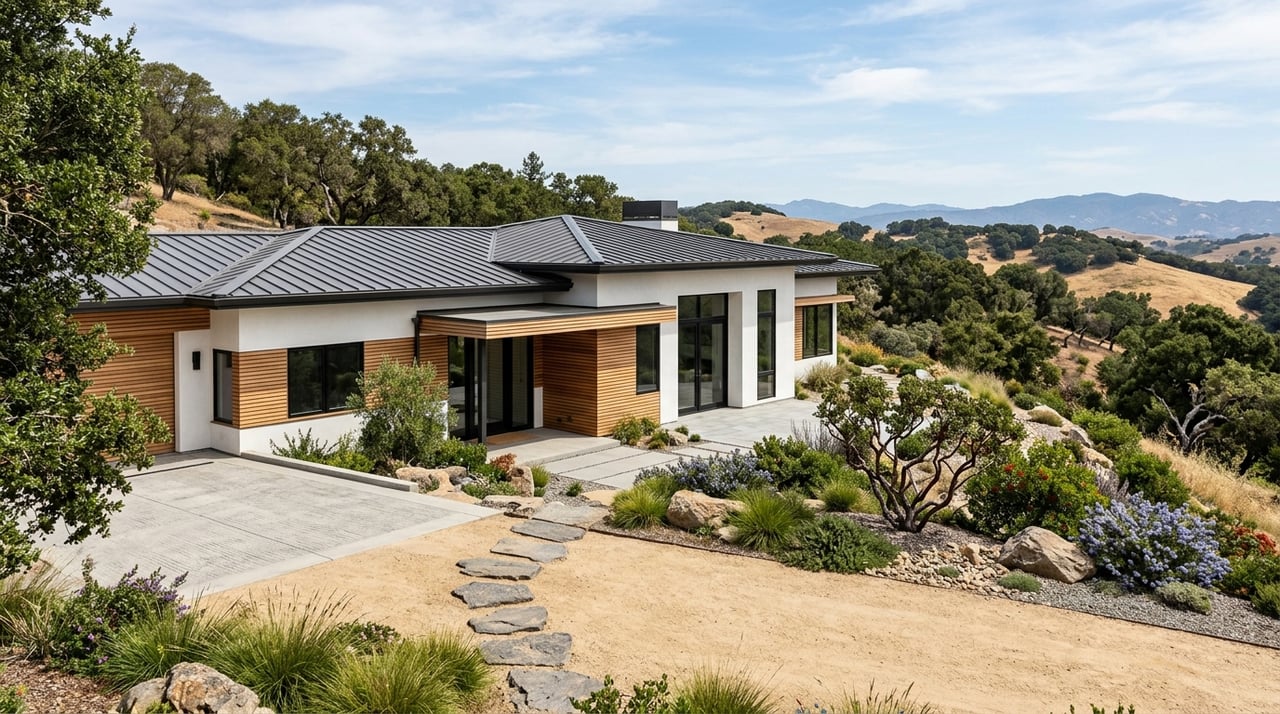
Portola Valley stands out for buyers who want a quiet, open-space-first setting. The town emphasizes trails, scenic roads, and natural views, and its own materials describe a feeling of being in the country. For many buyers, that combination creates a calm residential experience that is hard to replicate elsewhere on the Peninsula.
The town is especially trail-centered. Portola Valley says it has nearly the same number of trail miles as road miles, with multiple open spaces and public trail maps for hiking, biking, and equestrian use. If direct access to the outdoors is high on your list, this is one of the clearest reasons Portola Valley often rises to the top.
From a housing perspective, Portola Valley has 1,894 housing units, and its current profile shows a median owner-occupied value of $2,000,001. Town materials describe the housing pattern as predominantly large-lot single-family residences. The overall fit is strongest for buyers who value privacy, a low-key country feel, and are comfortable driving for most errands.
How Woodside compares
Woodside shares some of the same foothill appeal, but the feel is more distinctly rural and equestrian. The town describes itself as a rural residential community, and its public materials highlight wooded hillsides, scenic vistas, stream corridors, and equestrian heritage. If your vision of home includes more land and more seclusion, Woodside may be the stronger match.
Woodside also has a small village-like center. The Town Center is about 17 acres and includes a grocery store, hardware store, restaurants, shops, offices, and Town Hall. That gives buyers a modest local hub while the broader town remains rural in character.
The housing stock reinforces that identity. Woodside has 2,062 housing units, and its current profile also shows a median owner-occupied value of $2,000,001. In the RR district, the minimum lot size is three acres, which makes Woodside the clearest choice for buyers seeking acreage, strong privacy, and a more secluded setting.
How Los Altos Hills compares
Los Altos Hills is another large-lot foothill market, but it feels more structured around its town-wide path system. The town says it maintains roughly 80 miles of trails and off-road paths, describing them almost like a local sidewalk network. For buyers who want outdoor access built into daily movement, that is a meaningful difference.
Its identity is also rooted in preserving a residential-agricultural lifestyle. Town materials note that the founders insisted on one-acre minimums to maintain the rural atmosphere. That creates a setting that is private and low-density, while still feeling intentionally planned.
Los Altos Hills has 3,363 housing units, a 93% owner-occupied rate, and 100% single-unit housing in the current profile. Like Portola Valley and Woodside, its median owner-occupied value is listed at $2,000,001. This market tends to suit buyers who want large lots and quiet surroundings, but prefer a more formal path-network environment.
How Palo Alto compares
Palo Alto is the most different option in this group. It still offers foothill-adjacent scenery and major open-space resources, but it does so within a much larger city context. For buyers who want access to nature without giving up city scale and housing variety, Palo Alto often enters the conversation for that reason.
The city has dedicated 4,000 acres of open space for recreation and conservation, including Foothills Park, Baylands Nature Preserve, and Pearson-Arastradero Preserve. That is substantial, but the overall setting remains more urban-suburban than the smaller foothill towns. You are choosing a broader ecosystem, not just a different neighborhood feel.
Palo Alto has 29,550 housing units, with 79% owner-occupied housing and 86% single-unit housing. Its current profile shows a mean commute of 21.5 minutes, compared with 19.3 in Portola Valley, 28.8 in Woodside, and 29.3 in Los Altos Hills. Those numbers are best treated as directional, but they still support the idea that Palo Alto offers a more city-scale pattern of living.
Portola Valley vs nearby towns at a glance
| Town | Best known for | Housing feel | Daily lifestyle |
|---|---|---|---|
| Portola Valley | Trail-rich, open-space-first setting | Large-lot single-family homes | Quiet, private, country feel with car-based errands |
| Woodside | Rural and equestrian identity | Large lots, including very low-density areas | Seclusion, acreage, wooded setting, small local hub |
| Los Altos Hills | Extensive path network | Large-lot single-unit homes | Quiet residential-agricultural setting with structured paths |
| Palo Alto | Foothill access plus city convenience | Broader housing mix at larger scale | More services, more inventory, more urban-suburban rhythm |
Which buyers tend to prefer Portola Valley
Portola Valley is often the sweet spot for buyers who want a trail-rich lifestyle without going fully rural in the Woodside sense. It offers privacy and natural beauty, but the town identity feels especially centered on trails, open space, and tranquility. If you picture weekends outdoors and a quieter home base, Portola Valley has a strong pull.
It can also appeal to buyers who want an estate-like setting without prioritizing a retail core. The town’s planning framework centers scenic roads, open space, and a calm residential environment. That means the lifestyle tradeoff is fairly clear: less walkable convenience, more room to breathe.
For some buyers, that tradeoff is exactly the goal. If your version of luxury is peace, space, and immediate access to the outdoors, Portola Valley may fit better than a more active or service-heavy market. It is less about having everything close by and more about living in a setting that feels intentionally preserved.
How to choose the right foothill town
The simplest way to narrow your search is to rank your priorities honestly. Ask yourself whether you care most about land, trail access, seclusion, or convenience. Once you know your top two factors, the right market usually becomes much easier to identify.
You may lean toward Portola Valley if you want quiet, trails, privacy, and a low-key country feel. Woodside may be a better fit if you want acreage, horses, and the strongest sense of seclusion. Los Altos Hills may suit you best if you want large lots and an organized path network, while Palo Alto may make more sense if you want foothill scenery with a broader housing mix and more city convenience.
In a market like the Mid-Peninsula, small differences in town character can have a big impact on your long-term satisfaction. A home can be beautiful on paper and still feel wrong if the daily setting does not match your routine. That is why comparing lifestyle fit first can save you time and help you make a more confident decision.
If you are weighing Portola Valley against Woodside, Los Altos Hills, or Palo Alto, the right guidance can make the decision much clearer. The Doran Team helps buyers navigate Peninsula neighborhoods with local insight, thoughtful strategy, and a tailored approach to fit your goals.
FAQs
How is Portola Valley different from Woodside for homebuyers?
- Portola Valley is typically the better fit if you want a trail-rich, open-space-first lifestyle, while Woodside is more closely associated with acreage, horses, and a stronger rural-equestrian identity.
Is Portola Valley or Los Altos Hills better for trail access?
- Both offer strong outdoor access, but Portola Valley is especially trail-centered, while Los Altos Hills is known for its extensive off-road path network that functions as a town-wide system.
What makes Palo Alto different from Portola Valley for buyers?
- Palo Alto offers foothill access within a much larger city setting, with more housing inventory, more services, and a broader urban-suburban feel than Portola Valley.
What type of homebuyer is usually happiest in Portola Valley?
- Buyers who want privacy, quiet surroundings, scenic roads, and easy access to trails are often the strongest match for Portola Valley.
Are Portola Valley, Woodside, and Los Altos Hills similar in housing style?
- They share a low-density, large-lot character, but Portola Valley is known for its open-space lifestyle, Woodside for seclusion and equestrian appeal, and Los Altos Hills for its residential-agricultural setting and formal path network.