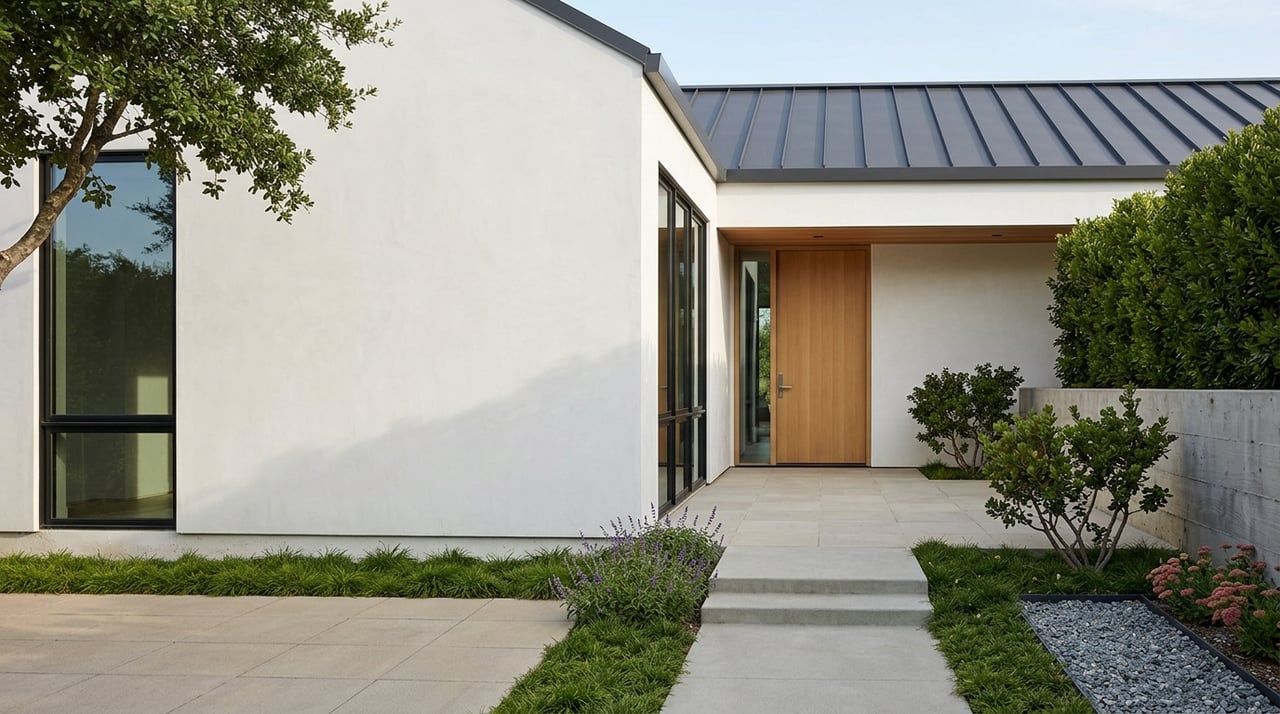
What to Know Before Building or Remodeling in Los Altos Hills: 2026 Guide
Building or remodeling in Los Altos Hills requires navigating strict town zoning ordinances, slope density formulas, and open space easements across its 9-square-mile semi-rural footprint. With minimum lot sizes typically starting at one to two acres, allowable floor area is heavily governed by site topography, requiring a mandatory two-permit process (Site Development and Building) with average review windows of 13 to 17 weeks.
Development Constraint | Town Threshold & Metric | Project & Design Impact |
|---|---|---|
Slope Density Thresholds | 10% slope (~1 acre min), 25% slope (~1.5 acre min), 33% slope (~2 acre min) | Steeper topography directly reduces maximum floor area and buildable envelope |
Building Height Limits | 27 ft max from finished grade; 35 ft max overall elevation | Prevents stacked three-story facades; ridgeline homes limited to single story |
Municipal Sewer Rules | Mandatory connection if public main is within 200 feet | Requires site engineering for gravity or pump connections before plan check |
Permitting Review Path | Two-permit requirement: Site Development Permit + Building Permit | Town average 13 to 17 weeks submittal window; eTRAKiT digital submittal required |
Public Hearing & Story Poles | Mandatory story pole installation 10 days prior to hearings | Applies to Fast Track and Planning Commission projects; 10 to 22 day appeal window |
Evaluating a luxury estate purchase or custom build in Los Altos Hills? Consult with The Doran Team at Compass for local land advisory.
Quick-Take: Los Altos Hills Remodeling Overview
Planning a custom home or major architectural remodel in Los Altos Hills requires a deep understanding of site topography before finalizing floor plans. Incorporating 9 square miles of rolling terrain in Santa Clara County, the town was established to preserve a low-density, semi-rural residential-agricultural lifestyle.
With residential land use accounting for 93% of town land, municipal planning prioritizes open-space preservation, natural creek protection, and ridge-line aesthetics over dense suburban development.
How Lot Conditions Shape Your Remodel or Custom Build
1. Slope Calculations and Floor Area Ratio (FAR) Limits
In Los Altos Hills, development potential is directly tied to average slope. While a flat parcel (10% slope or less) may require approximately 1 acre for development, parcels with a 25% slope require 1.5 acres, and a 33% slope requires 2 acres. Two adjacent parcels of identical square footage can have drastically different buildable floor area allowances depending on topography.
2. Open Space, Pathway, and Riparian Creek Easements
The town enforces open-space easements across areas containing native oak canopy, slopes exceeding 30%, and designated creek corridors. Additionally, Los Altos Hills features a public off-road pathway network spanning over 86 miles, with several trail easements traversing private property lines. These easements dictate pool, tennis court, and ADU placements.
3. Sewer Distance Rules and Utility Undergrounding
If a public sewer main is located within 200 feet of a parcel, town municipal code requires connection rather than septic usage. Furthermore, major remodels and new builds must place all overhead utility lines underground and submit comprehensive grading and erosion control plans prior to building plan check.
Design Guidelines and Architectural Massing Standards
Site-Responsive Design & Contour Integration
Architectural plans must conform to natural land contours rather than requiring massive cut-and-fill grading. Driveways, secondary structures, and primary residences must step down slopes to preserve natural topography and avoid visual disruption.
Height Limits, Ridgelines, and Massing Articulation
Building height is strictly capped at 27 feet from grade (and 35 feet from lowest building point to highest roof ridge). Stacked three-story facades are prohibited, and prominent ridgeline homes are frequently restricted to single-story structures with articulated exterior walls.
Wildfire Safety, Water Efficiency, and Green Building
New construction requires a minimum GreenPoint rating of 50, interior fire sprinklers, dark non-reflective exterior finishes, and drought-tolerant landscape screening installed prior to final occupancy inspection.
Navigating the Los Altos Hills Permitting Process
Two-Permit Architecture: Site Development and Building Permits
Major additions and new estate builds require two distinct approvals: a Site Development Permit followed by a standard Building Permit. All submittals are managed through the town's eTRAKiT digital portal.
Iterative Review Cycles and Agency Comment Letters
Town planners compile feedback from fire, civil engineering, and environmental committees into formal comment letters. Expect iterative plan revisions with response cycles taking 10 to 30 days per round.
Story Poles, Public Hearings, and Appeal Windows
Projects requiring public hearings demand story pole installation 10 days prior to review. Following approval, appeal windows span 10 days for Site Development permits and 22 days for Fast Track or Planning Commission projects.
Turnkey Home vs. Remodel Project Property: Making the Choice
Buying a turnkey luxury estate offers immediate occupancy and price certainty. Conversely, acquiring a project property allows complete custom design tailored to personal lifestyle preferences, provided the lot's slope and easement profile support your long-term vision.
Explore Luxury Estates & Land in Los Altos Hills
Whether purchasing an existing estate or evaluating buildable acreage, partner with The Doran Team at Compass for strategic land use advisory.
Frequently Asked Questions
What should buyers check before remodeling a home in Los Altos Hills?
Buyers should evaluate average lot slope, open-space easements, public sewer proximity (200-foot rule), utility undergrounding requirements, and site development permitting paths.
How long does permitting take for a Los Altos Hills build or major addition?
The town publishes an average timeline of 13 to 17 weeks from Site Development Permit submittal to Building Permit issuance, though complex hillside sites require longer.
Why does slope matter for Los Altos Hills properties?
Town zoning uses average slope to calculate maximum buildable floor area and minimum lot size requirements, directly limiting building footprint on steep parcels.
Do Los Altos Hills projects usually need landscape planning?
Yes. Landscape screening plans are mandatory for major additions and new residences, with screening plants required to be installed before final occupancy inspection.
Is a turnkey home better than a project property in Los Altos Hills?
Turnkey homes offer immediate livability and timeline certainty. Project properties allow custom architectural creation if the lot's slope and easements support your design goals.
Explore Related Peninsula Neighborhood & Seller Guides
Authored by The Doran Team | Compass Luxury Division
Drew Doran and The Doran Team represent premier luxury real estate specialists with Compass (CA DRE #01730030), guiding buyers and sellers across Los Altos Hills, Atherton, Palo Alto, Menlo Park, and San Carlos. Backed by extensive local Peninsula market knowledge, The Doran Team delivers strategic real estate advisory and land use insights.
Direct: (650) 241-8880 | Office: Menlo Park, CA. Learn more on The Doran Team Contact Page.
Source Notes: Zoning codes, slope density formulas, and permit timelines verified via Town of Los Altos Hills Planning and Building Department municipal directories as of 2026.